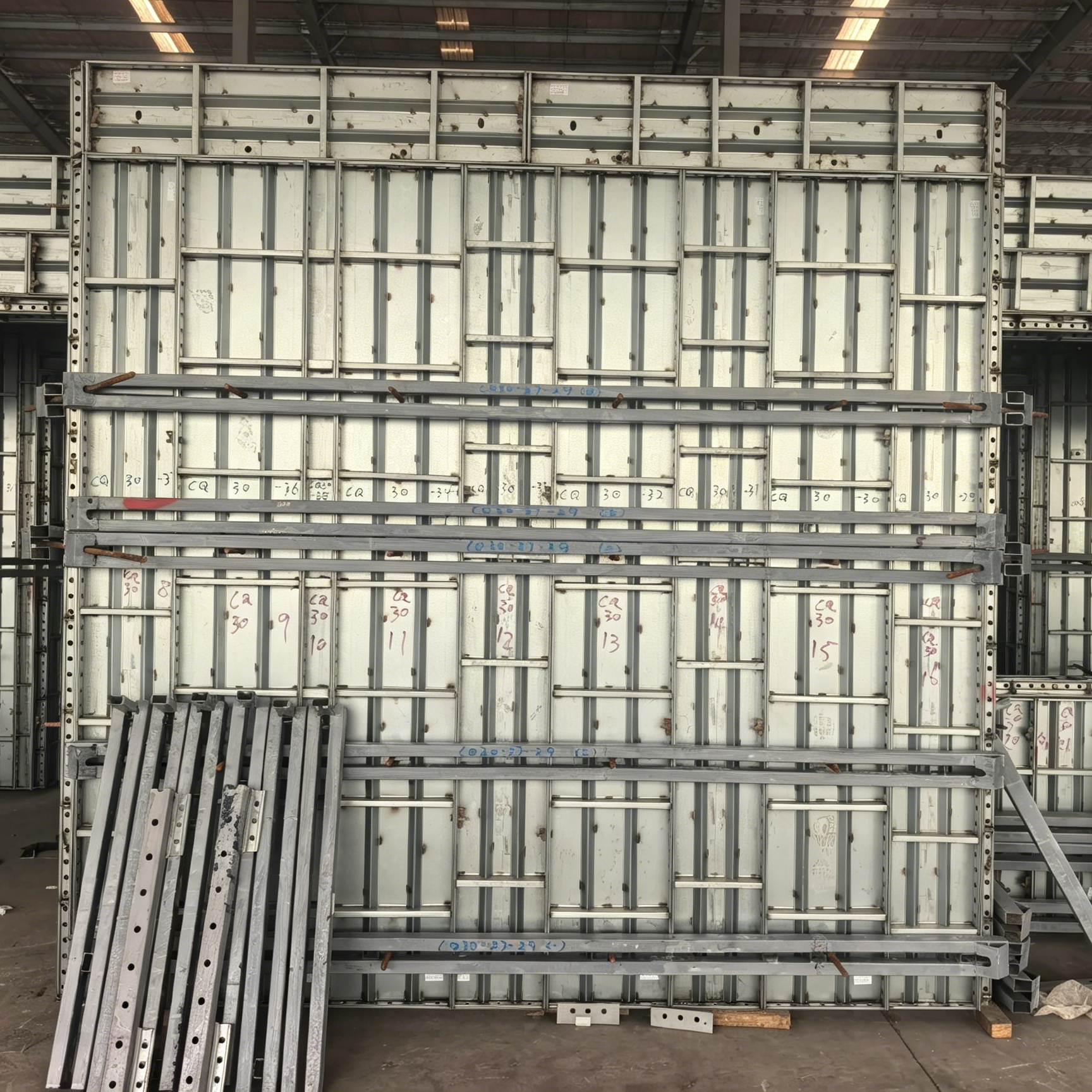
Why delivery, not panel quality, is where Central Asian orders go wrong
Most formwork problems in Central Asia do not start in the factory. They start at a border station. Uzbekistan and Kyrgyzstan are double landlocked; Tajikistan and Turkmenistan route through more than one customs territory; Kazakhstan is the transit corridor for most of the region. Cargo is lifted, re-stacked and reloaded at least once, often in winter. A set that inspected perfectly in Foshan can reach site with bent frame corners, bundles in the wrong order, and a packing list that no longer matches what is on the truck.
That is not a quality claim. It is a schedule claim, and it is usually settled after the money has been spent. Three things decide whether a delivery lands cleanly: how the bundle is built, which documents are final before departure, and what your site team does on arrival. This note covers all three.
1. Build the bundle for transshipment, not for the factory yard
Panels stacked for a warehouse photo and panels stacked for a rail container are different exercises. Border transshipment means the load is lifted as a unit, set down, and lifted again, often by equipment the shipper never sees.
- Bundle size over bundle count. Fewer, heavier, well-bound bundles survive handling better than many small ones. Fix the bundle weight against the lifting capacity at the receiving station, not the capacity at the loading dock.
- Protect the frame, not the face. The face takes cosmetic scratches; the corner weld and frame ends decide whether the panel still assembles. Corner protection and edge banding on every bundle, every time.
- Bundle marking that survives two borders. A bundle number stencilled on the frame and repeated on a weatherproof tag, matched to the layout drawing. If the marking exists only on the packing list, it is not marking.
- Accessories in marked crates. Ties, pins, wedges, walers and braces must never travel loose in the container. A missing crate of pins stops a pour just as effectively as a missing panel.
- Moisture control. Cargo crosses climates, from a humid port or a dry inland yard into a continental winter. Wrapping plus desiccant, and a line on the packing list stating that the wrap travels with the shipment and is not packaging to be discarded.
- Loading order equals unloading order. Last in, first out at the site gate. Confirm the laydown area and crane access before agreeing the loading plan.
2. Fix the route and the wagon before you book the load
Rail container, flat wagon, or road trailer across the border: each changes the packing requirement, the document set and the damage risk. Sealed containers stay sealed through transshipment, which is their main advantage. Flat wagons expose the cargo but suit oversized panels and relax the loading height limit. Whatever the route, agree in writing where the cargo changes hands and who carries the cost at that point.
3. Documents that must be final before departure
- Commercial invoice, consistent with the contract terms and the HS classification.
- Packing list built on bundle numbers, not on panel totals.
- Certificate of origin, in the format your importer's broker expects.
- Rail waybill: SMGS for the CIS rail network, CIM where a European leg applies.
- HS classification confirmed by your own customs broker, not by the supplier. A wrong heading is a delay at the border, not at the factory.
- Cargo insurance covering the full transit, transshipment included.
- Conformity documents, where your market requires them. If EAC conformity applies, confirm early who files it; in practice this is handled by the importer or its local representative, not by the exporter.
Two practical rules. A document that is coming next week does not exist at the border. And ask for a scanned set before the container is sealed, then compare it against the packing list line by line: a discrepancy found at the factory costs a phone call, the same discrepancy found at the border costs weeks.
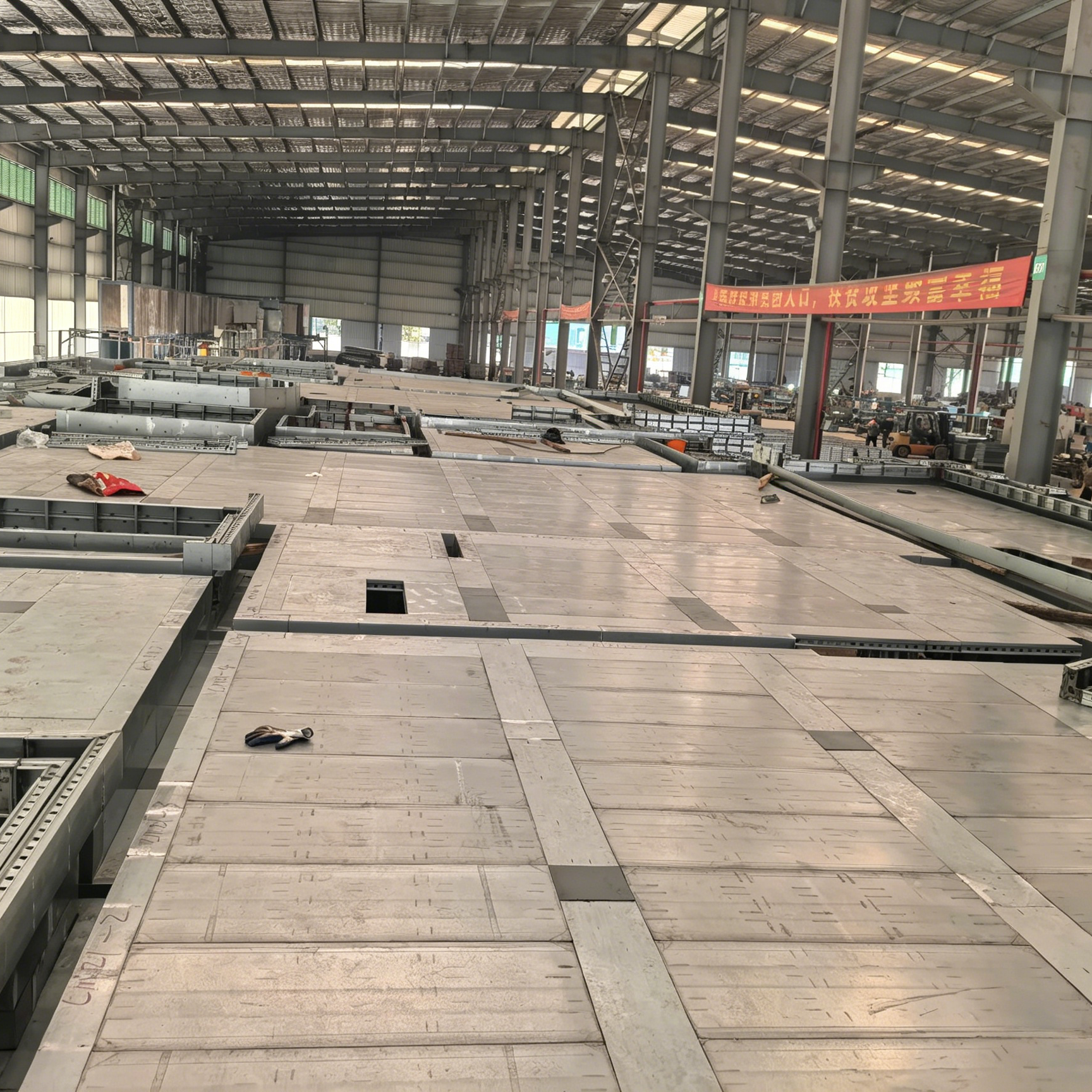
4. Eight checks before you sign the delivery note
- Count bundles, not panels, against the packing list.
- Photograph every bundle before unloading. That photograph is your only evidence once the wrap is opened.
- Inspect frame corners and panel edges for bending or weld damage.
- Check that bundle numbering matches the layout drawing and the packing list.
- Confirm accessory crates are sealed and complete against the schedule.
- Record coating damage by panel number and approximate area.
- Write any shortage or damage on the delivery document before signing. A clean signature is acceptance, and it is very hard to reopen afterwards.
- Register the set: arrival date, batch number, panel count, and the turnover cycles you expect from it.
5. Where modular steel formwork fits
Delivery discipline matters most on repetitive work, where the same set is reused storey after storey and one damaged bundle can hold up an entire floor cycle.
- Wall formwork for core walls, shear walls and basement walls, where a modular wall system keeps the same panel grid from pour to pour.
- Column formwork for rectangular and square columns, where an adjustable column set avoids a new mould for each section change.
- Beam formwork for downstand and edge beams, where a beam assembly has to carry its own working platform safely.
- Slab formwork for suspended slabs and transfer plates, where a slab system is judged on deflection control and the stripping sequence.
- Stair formwork for cast-in-place flights, where a stair set has to be right the first time because the geometry does not forgive.
Our Q700 high-strength alloy steel panels are built in standard modular sizes with a protective coating for site handling, and are specified for repeated turnover. Custom sizes are available where the standard grid does not match the drawing, and our engineering team can review the panel combination against your layout before the loading plan is fixed.
6. What to send us before you book freight
Send the destination city and the border crossing you intend to use, the transport mode (container, flat wagon or road), your panel layout, the number of building repetitions you expect, and the document list your importer requires. We will reply with the bundle plan, the packing and marking proposal, and the documents we can provide, stated plainly and without claims we cannot support.
Краткое содержание на русском
В проектах Центральной Азии проблемы с поставкой стальной опалубки чаще связаны не с качеством панелей, а с логистикой. Узбекистан и Кыргызстан не имеют выхода к морю, груз пересекает несколько границ, а на пограничных станциях контейнеры и вагоны перегружают. Поэтому до загрузки нужно согласовать три вещи. Первое — как сформирована связка: размер и вес связки под грузоподъёмность принимающей станции, защита углов и торцов рам (именно они определяют, соберётся ли панель после перегрузки), маркировка номера связки на раме и на бирке, совпадающая с монтажным чертежом, крепёж в отдельных закрытых ящиках, влагозащита и порядок погрузки «последним загрузили — первым выгрузили». Второе — документы: инвойс, упаковочный лист по номерам связок, сертификат происхождения, железнодорожная накладная SMGS, код ТН ВЭД, подтверждённый вашим брокером, страхование груза и документы о соответствии, если они требуются; применимость EAC и порядок оформления нужно уточнить заранее, как правило этим занимается импортёр или его местный представитель. Третье — приёмка на площадке: пересчёт связок по упаковочному листу, фотофиксация до разгрузки, проверка углов и торцов рам, сверка маркировки с чертежом, комплектность ящиков с крепежом, фиксация повреждений покрытия по номерам панелей, запись недостач и повреждений в товаросопроводительных документах до подписания, учёт партии с датой, номером и ожидаемым числом циклов.
Russian summary is a machine translation draft and is pending native review.